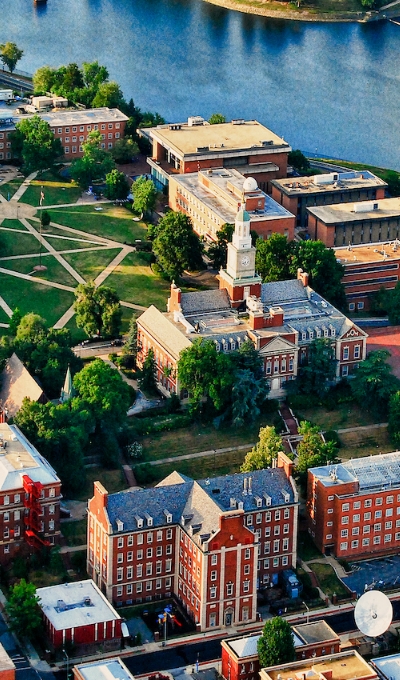
Discover HBCU MSW Programs Online & On-Campus 

With more than 100 historically Black colleges and universities (HBCUs) across the United States, you may select from many online and on-campus HBCU graduate programs, including Master of Social Work (MSW) programs. In addition to a diverse and inclusive student experience, HBCUs may offer affordability not often found at other institutions.

Howard University

School of Social Work

infoAD

Master of Social Work (MSW)

The online Master of Social Work program from Howard University School of Social Work prepares students for advanced direct or macro practice in culturally diverse communities. Two concentrations available: Direct Practice and Community, Administration, and Policy Practice. No GRE. Complete in as few as 12 months.

  • Concentrations: Direct Practice and Community, Administration, and Policy Practice
  • Complete at least 777-1,000 hours of agency-based field education
  • Earn your degree in as few as 12 months

info AD

Graduate Programs at HBCUs vs. Predominantly White Institutions (PWIs)

In terms of academics, HBCU graduate programs and graduate programs at predominantly white institutions (PWIs) often share a similar foundation—especially in fields like social work, where CSWE accreditation standards shape core competencies and program design. That said, choosing an HBCU vs. a PWI is often less about the subject matter and more about the learning environment you want: institutional mission, campus culture, mentorship, and community support.

Historically Black colleges and universities were founded in an era of segregation to expand access to higher education for Black Americans, and their mission has remained centered on educating Black students. While HBCUs were established to educate Black students, their student bodies today include people of many races and ethnicities. Recent enrollment data published in 2025, shows that HBCUs remain majority-Black while also growing more diverse: in fall 2023, 72.9% of HBCU students identified as Black or African American (about 27.1% non-Black), and in fall 2022, 75.8% of enrollment was Black (about 24.2% non-Black). 

Although not an official designation for any particular postsecondary school, the term “predominantly white institution” is commonly used to describe colleges and universities where white students make up a numerical majority (often 50% or more)—and it can also refer to how institutional history and campus climate shape the student experience.

Advantages of Attending a Historically Black College or University 

Since selecting a college is such a personal choice, understanding how attending an HBCU benefits students may help you in your decision. Here are a few advantages of an educational journey at HBCUs: 

  • Diverse student body: In terms of curriculum and academic standards, graduate programs at HBCUs and predominantly White institutions (PWIs) can be similar—so the choice often comes down to personal fit, campus culture, and the type of learning environment you want. Historically Black colleges and universities were founded during segregation to expand access to higher education for Black Americans. Today, many HBCUs enroll students from diverse racial and ethnic backgrounds. For example, using IPEDS data from 2025, the Postsecondary National Policy Institute reports that in fall 2023, 72.9% of students enrolled at HBCUs identified as Black or African American, meaning 27.1% were non-Black. Although “predominantly White institution” is not an official federal designation, it’s a commonly used term to describe colleges and universities that historically served, and often still primarily enroll, White students.
  • Stronger sense of community: Historically Black Colleges and Universities (HBCUs) are often associated with strong community and support, and recent data backs that up. A UNCF and Healthy Minds Network report published in 2025 found that 83% of HBCU students reported feeling a sense of belonging on campus, compared with 73% of students nationally and 72% of Black students at small predominantly White institutions (PWIs). The same report also found that 45% of HBCU students were “flourishing” (a measure of overall mental well-being), compared with 36% nationally, and that many students reported having supportive peer networks, including a community in which they feel connected and supported in their identity. Earlier alumni research from Gallup (published in 2015) also suggests that supportive college experiences may matter: Black HBCU graduates were more likely than Black graduates of non-HBCU institutions to strongly agree that their professors cared about them as people and to report other key forms of mentorship and encouragement.
  • Better relationships with faculty: Many students choose HBCUs because they’re looking for a more supportive, mentor-rich experience. Recent research on faculty at research-focused HBCUs suggests that instructors often take on substantial student-facing responsibilities, and many describe staying at HBCUs because they value the mission and their close relationships with students. Alumni survey data also aligns with this: in a Gallup-Purdue Index analysis, 58% of Black HBCU graduates strongly agreed that their professors cared about them as people (compared with 25% of Black graduates from non-HBCU institutions).

Advantages of Obtaining an MSW From an HBCU

Ensuring you get the classes you may need and want might be important when selecting the right school. The typical curriculum in an HBCU master’s in social work program covers topics such as Human Behavior and the Social Environment, Research and Evaluation Methods, and Generalist Practice. In addition, HBCU graduate programs offer other foundational coursework, such as Ethical, Ethnic, and Cultural Considerations in Social Work, which delves into socioeconomic discrimination and racial injustices. The advantage to this course and others like it is they provide you with the tools necessary to address these issues in your future social work practice.

Traditional vs. Online Learning at a Historically Black College or University 

As you search for the right HBCU, you may wonder if an online graduate degree or on-campus learning format would be best. While the decision is ultimately yours, there are a few similarities and differences between the two that you should consider.

  • Flexibility: Online learning could be ideal for students who work, have family responsibilities or don’t want to commute. On the other hand, on-campus learning may be a better fit for students without these demands on their time.   
  • Social interaction: If you prefer face-to-face interactions with classmates and professors, online learning may not be right for you. While online programs lack in-person connections, many offer networking opportunities and the ability to interact and communicate with fellow students and faculty.
  • Location: If you live near an HBCU, the history and culture of on-campus learning may enrich your educational journey. However, if an on-campus HBCU program is not an option, an online program may prove the best choice.
  • Discipline: Self-motivated students may find online classes an ideal platform to learn, while others thrive in on-campus learning environments that adhere to in-person attendance policies and stricter assignment deadlines.

HBCU Admission Requirements for an MSW 

While admission requirements vary among schools, HBCU admission requirements are generally the same for online and on-campus master’s degrees in social work programs. Requirements may include: 

  • Completed bachelor’s degree. A bachelor’s degree in a field related to social work may be required. However, if you wish to apply for advanced standing MSW programs, you may be required to have a Bachelor of Social Work (BSW) from a program accredited by the Council on Social Work Education (CSWE).
  • Completed graduate application. This may be available online. 
  • Letters of recommendation. Schools may require two to three letters from professionals such as previous instructors or coworkers.
  • Official transcripts. Academic records from all previous post-secondary schools you have attended may be required. 
  • A personal statement. This is your opportunity to discuss who you are, your strengths (education and/or experience) and why you would like to participate in an MSW program.
  • Interview. This is a chance to speak directly with the MSW admissions committee.

HBCU Financial Aid and Scholarships

With tuition, books, and other fees, higher education can be expensive—often leaving graduates with significant student debt. One potential advantage of attending an HBCU is affordability: UNCF reports that its member HBCUs keep average tuition about 27% lower than comparable institutions, and that HBCUs’ cost of attendance is about 27% less than similar non-HBCUs ($26,791 vs. $35,049). (As always, costs vary by school and program, and graduate tuition can differ from undergraduate rates.)

HBCUs also serve many students with substantial financial need. In fall 2023, HBCUs enrolled 292,524 students, including 34,856 graduate students. UNCF research has found that a large share of HBCU students come from low-income backgrounds (for example, 51% vs. 23% at the national average of four-year institutions). To help students manage costs, many HBCUs offer a mix of need-based and merit-based aid, including institutional scholarships and grants, often alongside federal aid and external scholarships. Most financial aid programs (including scholarships) have annual deadlines, so it’s important to check dates early each year.

Discover HBCU Online MSW Programs

Interested in experiencing the rich history of an HBCU, yet you want the flexibility of remote learning? Consider an online MSW program that offers flexibility while maintaining the same high-quality education as on-campus programs.

Discover HBCU On-Campus MSW Programs

If you prefer the on-campus HBCU experience several institutions offer in-person MSW programs.  

Historically Black Colleges and Universities FAQs

In order to choose the best school for you, you may have questions about HBCU graduate programs you’re considering. Here are some common questions prospective MSW students may have. 

What Is the Best HBCU MSW Program for Me?

Selecting an MSW program, whether it’s one at an HBCU, an on-campus or an online MSW program, is a personal decision. Thoroughly researching each institution you are interested in may help ensure you get everything you are looking for in a program. Remember that if one program does not sound right for you there are plenty of other options to consider.

Do HBCUs Offer Other Advanced Degree Programs?

If you are not sure that an MSW is the best educational path, you may find that many HBCU online graduate programs offer other degrees. The types of advanced degree offerings vary among institutions. You may find a host of online HBCU degree programs, including business administration, criminal justice, public administration, special education, environmental studies, and nursing.

Are There Part-Time MSW Programs Offered at HBCUs?

In general, HBCUs offer various program options like traditional, advanced standing, full-time and part-time for on-campus learning. Of course, part-time MSW programs may take you about twice the time to complete. You may find HBCUs have a limit on how long you may spend in a program, for example, four to five years.

What Is the Percentage of Applicants Accepted into HBCUs?

As with any school (private or public), the acceptance rate at HBCUs varies from school to school. Some welcome most applicants, while others are more selective. Meeting all admission requirements and submitting your application before the submission deadline may help ensure acceptance to your desired HBCU. Here’s a quick look at some acceptance rates for the 2024-2025 school year:

Information last updated: January 2026