
OnlineMSWPrograms.com is owned by 2U, LLC, parent company of edX. Our goal is to help learners make confident, informed decisions about their education and career. Some programs shown here are offered by universities that partner with 2U, for which 2U provides marketing and operational support and receives compensation. Other programs shown may be paid advertisements from third parties. Both types of programs are identified with the word AD or Advertisement. We aim to keep information current and accurate. Learn more about edX and our partners.
Psychiatric Social Work (Mental Health): Career Guide
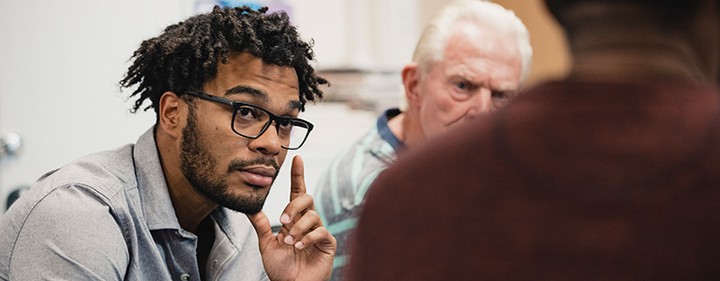
Psychiatric social worker is one of the example job titles the Bureau of Labor Statistics (BLS) lists for mental health and substance abuse social workers (SOC 21-1023), who assess and treat people with mental, emotional and substance use problems. The BLS SOC definition lists individual and group therapy, crisis intervention and case management among their activities. Whether a role is clinical depends on licensure, not setting: the National Association of Social Workers (NASW) health care standards expect an MSW and a clinical-level license, or supervised clinical practice where the state allows it, from anyone who diagnoses mental or behavioral health conditions or provides psychotherapy.
Table of Contents
- What is a Psychiatric Social Worker?
- How to Become a Psychiatric (Mental Health) Social Worker
- Types of Psychiatric Social Workers
- What Psychiatric Social Workers Do
- Challenges of Psychiatric Social Work
- Why People Become Mental Health Social Workers
- Frequently Asked Questions
What is a Psychiatric Social Worker?
Much of this work is with people whose conditions are severe enough to need hospital or intensive outpatient care, as the social workers quoted in the setting sections below describe it. Mental health social workers support those clients, provide therapy and coordinate their care as part of a larger treatment team.
Job Description of a Mental Health Social Worker at a Glance
Mental health social workers carry out assessments, individual and group therapy, crisis intervention and case management, the activities the SOC definition above lists for the occupation. NASW’s behavioral health page names private practice, hospitals, community mental health agencies, primary care, treatment centers and other agencies among the settings.
How a mental health social worker differs from a medical social worker and a psychiatrist
The three roles overlap on a treatment team but differ in training and scope. NASW’s health care standards call for a BSW or MSW from a CSWE-accredited program and say social workers should be licensed or certified as required, while psychiatrists are medical doctors (M.D. or D.O.) who specialize in mental health and can prescribe medication, according to the American Psychiatric Association (APA). Our guide to medical social work covers the health care social worker role in full.
- Mental health (psychiatric) social worker: an MSW, with a clinical-level license or, where the state allows it, supervised practice, for diagnosis and psychotherapy (NASW). The work centers on assessment, therapy, crisis intervention and case management in hospitals, community mental health agencies and treatment centers (BLS, NASW).
- Medical (health care) social worker: a BSW or MSW from a CSWE-accredited program, licensed or certified as required (NASW). The work takes place within health care settings (NASW).
- Clinical social worker (a license level, not a job): an MSW, with a clinical-level license or, where the state allows it, supervised clinical practice (NASW). It is the license NASW ties to diagnosing mental or behavioral health conditions and providing psychotherapy (NASW).
Syracuse University • Syracuse, NY
Master of Social Work (MSW)
Program Type
Master's
Enrollment Type
Full-Time and Part-Time
Delivery Mode
Online
Length of Program
As few as 24 months
Credits
36-60
Concentrations
Advanced Integrated Practice, Advanced Clinical Practice
Admission Requirements
- Minimum 3.0 GPA is preferred
- Transcripts
- Resume
- Essays
- Prerequisite coursework
- Letters of recommendation

Simmons University • Boston, MA
Master of Social Work (MSW)
Program Type
Master's
Enrollment Type
Accelerated and Full-Time and Part-Time
Delivery Mode
Online
Length of Program
As few as 9 months
Credits
37-65
Concentrations
Mental Health Practice Optional Certificate, Trauma Practice Optional Certificate, Clinical Practice with Active Service Members, Veterans, and Families
Admission Requirements
- Resume
- Transcripts
- Recommendation forms
- Statement of professional and educational intent

Howard University • Washington, DC
Master of Social Work (MSW)
Program Type
Master's
Enrollment Type
Full-Time and Part-Time
Delivery Mode
Online
Length of Program
As few as 12 months
Credits
45+
Concentrations
Direct Practice, Community, Administration and Policy (CAP) Practice
Admission Requirements
- Three (3) letters of recommendation
- College transcripts
- A personal statement
- An application essay
- A resume
- Bachelor of Social Work from a CSWE-accredited institution, award within four years of first term start date
- Minimum cumulative GPA of 3.0 in all social work foundation and undergraduate coursework

University of Denver • Denver, CO
Master of Social Work (MSW)
Program Type
Master's
Enrollment Type
Full-Time and Part-Time
Delivery Mode
Online
Length of Program
As few as 12 months
Credits
54-81 graduate-level credits
Concentrations
Mental Health and Trauma, Health, Equity and Wellness
Admission Requirements
- Bachelor’s degree from a regionally accredited institution to be considered for admission
- Minimum undergraduate GPA is a cumulative 2.5 on a 4.0 scale or a 2.5 on a 4.0 scale for the last 60 semester credits or 90 quarter credits (approximately two years of work) for the baccalaureate degree
- Official transcripts
- Letters of recommendation
- Resume
- Career goals statement

Mental health social worker salary
The BLS reports pay for psychiatric and other mental health social workers under SOC 21-1023, mental health and substance abuse social workers, in its May 2025 Occupational Employment and Wage Statistics (OEWS) release. The national median annual wage was $60,280 and the mean was $68,030, with an estimated 132,810 people employed in the occupation. The middle 50 percent earned between $47,070 (25th percentile) and $79,730 (75th percentile), the lowest-paid tenth earned $39,740 or less and the highest-paid tenth earned $104,170 or more.
In psychiatric and substance abuse hospitals, the OEWS industry data show a mean annual wage of $66,840 and a median of $62,760, with 9,580 employed. These figures cover workers at all experience levels, so they are not starting pay, and they describe the occupation rather than any degree.
Learn more about salaries for social workers.
How to Become a Psychiatric (Mental Health) Social Worker
NASW’s health care standards say social workers in health care settings need a BSW or MSW from a CSWE-accredited program and should be licensed or certified as required, and that anyone who diagnoses mental or behavioral health conditions or provides psychotherapy must hold an MSW and should be licensed at the clinical level or, where the state allows it, work under supervision. State boards set the legal requirements. The steps below follow that path:
- Earn a bachelor’s degree in any field: the Council on Social Work Education (CSWE) says any bachelor’s degree lets you work toward an MSW, and a BSW is not required.
- Complete an MSW from a program accredited by the Council on Social Work Education (CSWE). CSWE’s 2022 standards set field education at a minimum of 900 hours at the master’s level, and mental health coursework to look for includes assessment, diagnosis, trauma-informed practice, substance use and crisis intervention.
- Choose field placements in medical, behavioral health or psychiatric settings when possible, such as inpatient psychiatry, community mental health, crisis services, integrated primary care or substance use treatment.
- Apply for licensure with your state board first, as the Association of Social Work Boards (ASWB) advises on its exam page, which lists exam categories including Bachelors, Masters, Advanced Generalist and Clinical.
Licensing is set by each state, so whether a particular job requires a license, and at which level, depends on the state and the employer. Check with your state board; our state licensing boards directory lists them, and our guide to the steps to a clinical license walks through the clinical path.
Titles and employers for the social workers quoted in this guide are as given when it was first published in 2021.
“I recommend taking classes on therapeutic modalities you’re interested in (psychodynamic work, cognitive behavioral therapy, family systems, etc.),” said Anne Friedman, ASW, an associate clinical social worker fellow in Kaiser Permanente’s Psychiatry Department.
Classes in trauma, family dynamics and the Diagnostic and Statistical Manual of Mental Disorders (DSM-5-TR) may also be useful.
“[I]f your program offers elective classes on clinical diagnosis and the Diagnostic and Statistical Manual of Mental Disorders (DSM-5), take as many as you can!” said Hillary Paffenroth, LCSW, who works as a psychiatric social worker for Comprehensive Crisis Services of the City and County of San Francisco. “I have become a strong clinician in this area due to the nature of my internships and jobs. However, [I] feel this was lacking in my overall academic work.”
Students can also identify the populations they would like to work with and take classes that are relevant to those populations. Friedman recommended that students actively seek field placements in medical and/or psychiatric settings.
“One of the reasons I’m doing a post-master’s training year in mental health is that I felt like my internships weren’t especially clinical,” she explained. “I think it can be hard to enter psychiatric social work after grad school if your internships haven’t been in this field, so I would encourage MSW students to pursue internships in agencies or organizations doing mental health work if this is an area they’d like to go into. Different settings provide different experiences in terms of duration of treatment – psychiatric ER will be short-term and crisis-focused, versus an agency providing long-term therapy to trauma survivors, for example.”
Paffenroth encouraged social work students to be open to different concentrations going into the MSW program, citing her own experience changing concentrations after completing an employer-based internship with the Berkeley Mobile Crisis Team.
“I was initially enrolled in the child youth and families concentration. However, this limited my internship options and ultimately would have limited my career options if I had stayed within that concentration,” she said. “Changing to community mental health felt like a big step and was somewhat scary at the time,” she recalled. “In hindsight, it was a very wise choice. So, my advice is to be flexible and don’t limit your possibilities just because you have a certain mindset going in.”
Our guide to how concentrations differ can help you compare options.
Sponsored Programs that May Help You Become a Social Worker
| Institution & Program | Study Length | Enrollment |
|---|---|---|
| As few as 12 months | Full-Time, Part-Time | |
| As few as 24 months | Full-Time, Part-Time | |
| As few as 9 months | Accelerated, Full-Time, Part-Time | |
| As few as 12 months | Full-Time, Part-Time |
Types of Psychiatric Social Workers
Job titles in this field overlap, so it helps to know how they map. Psychiatric social worker is one of the example titles the BLS lists for mental health and substance abuse social workers, and “clinical social worker” describes a license level rather than a job: NASW’s health care standards tie diagnosis and psychotherapy to a clinical-level license or supervised clinical practice where the state allows it. A mental health social worker can therefore be clinical or not, depending on the license held, the state and the role.
Responsibilities and client populations vary with the work setting and the team, as the practitioners quoted below describe.
In general, the types are inpatient, emergency and crisis services, and outpatient mental health social workers. Depending on the setting and role, some mental health social workers work in all three areas.
Inpatient Psychiatric Social Workers
Inpatient psychiatric social workers work in the psychiatry departments of hospitals and medical centers with patients who have been hospitalized for debilitating or dangerous psychological or behavioral issues, such as severe substance use, psychosis, bipolar disorder and schizophrenia. They conduct psychosocial assessments of patients’ mental health status and needs, provide psychotherapy and other clinical services, coordinate with the larger treatment team, connect clients with resources, and plan discharge and follow-up.
Psychiatric departments in hospitals tend to have several units that treat different mental health or behavioral problems.
“Within the psychiatry department I’m on two teams, chemical dependency (CD) and adult mental health. CD is an entirely group-based program, and I help facilitate an early recovery group two days a week and a drop-in support group for dually diagnosed (substance use and mental illness) patients once a week,” Friedman said. “Within the adult team, I do intakes for new patients, see a caseload of individuals, and run groups.”
“In hospital settings psychiatric social workers are an integral part of the multidisciplinary team, making recommendations for treatment, rehabilitation and social service connections,” said Lynsey Clark, MSW, who works as a psychiatric social worker at San Francisco General Hospital’s inpatient psychiatric unit. “Within the hospital setting psychiatric social workers can make an enormous difference in the patients’ material reality through therapeutic interventions and by connecting them with valuable social services, which has the potential to improve their circumstances. We are also advocates for the patient, pushing for more time when needed and better placements.”
Inpatient social workers also meet regularly with medical staff to develop and adjust a client’s treatment plan.
“I work with psychiatrists (MDs), nurses (RNs, LVNs and psyche techs), occupational therapists (OT’s), and other social workers (LCSW and MSWs),” Clark said. “Treatment for all patients is team based and all the disciplines meet four times a week in order to discuss the most appropriate treatment and care for the patient.”
Not sure what’s the difference between an MSW and an LCSW? Check out our MSW vs LCSW FAQ!
Psychiatric Emergency Services and Crisis Response Social Workers
For patients in acute crisis or in danger of hurting themselves or others, social workers on crisis or emergency services teams conduct psychiatric assessments, offer short-term crisis support and coordinate care. Emergency care teams within larger medical centers and crisis services at public health departments are among the settings that employ them.
Crisis and emergency services social workers work with clients briefly to assess their needs, help them obtain the intensive care they require and, in some cases, recommend involuntary hospitalization. These settings are shorter-term than inpatient hospital settings, as patients are generally directed to hospitals or intensive care facilities for longer-term care.
Paffenroth said one of her main responsibilities is determining if patients need to be placed on a psychiatric hold, and that the people she serves tend to be severely ill and in need of immediate assistance and supervision.
“The reasons that an individual would be placed on a hold are that they are currently a danger to self, a danger to others, or gravely disabled,” she said. “The first two categories are fairly straightforward. If someone is suicidal or homicidal, or if their actions are placing themselves or others at significant risk of danger, they would meet criteria. The third category, gravely disabled, means that an individual cannot take care of their most basic needs such as eating, bathing, having a place to live, attending to a serious medical condition, etc.”
Clark described her work in an emergency psychiatric setting, Psychiatric Emergency Services (PES) at Contra Costa County Regional Medical Center.
“My patients were often experiencing psychotic episodes, mania, depression, suicidal ideation, homicidal ideation and self-harming behaviors,” she said. “The work is extremely fast paced and demanding, [as we are] working with patients who have a very high acuity. Professional expectations included assessing the patient for risk, brief therapy, family reunification and assisting in the transfer or discharge of the patient.”
Outpatient Psychiatric Social Workers
Outpatient psychiatric social workers provide therapy and care coordination to people who do not need immediate hospitalization but still struggle with severe mental illness and debilitating emotional or behavioral issues. Patients in outpatient psychiatric settings are often at risk of needing hospitalization or have recently been discharged from an inpatient setting.
At Kaiser Permanente, Friedman also has experience working with clients in outpatient settings.
“I also spend two mornings in the intensive outpatient program, for patients who are at risk of psychiatric hospitalization or who have just been discharged from a higher level of care,” she said. “My patients are ages 18-70+ and come in with a pretty wide range of presenting problems – from heroin addiction to bipolar disorder to postpartum depression.”
Outpatient social workers tend to work longer with patients and can follow them through multiple systems as they move from intensive care back home or to another facility.
Charles Berman, MSW, is an intensive outpatient psychiatric social worker with the University of California, San Francisco’s (UCSF) citywide case management forensic team, where he supports and provides therapy to severely mentally ill adults who are also involved in the criminal justice system.
“[My colleagues and I provide] intensive wraparound services to clients as they cycle in and out of the jail, the state hospitals, local hospitals, and the community,” he said.
In addition to her work in inpatient psychiatric settings, Clark worked in an outpatient psychiatric setting.
“I provided individual therapy for patients with a variety of mental health needs including depression, anxiety, and PTSD,” she said. “In an outpatient psychiatric setting, social workers are employed as therapists and they perform the same duties as MFTs, PsyDs and PhDs. They conduct various groups including dialectical behavioral therapy, cognitive behavioral therapy, and seeking safety, among others.”
What Psychiatric Social Workers Do
The BLS SOC definition describes the work as assessing and treating individuals with mental, emotional or substance use problems, through activities that include individual and group therapy, crisis intervention, case management, client advocacy, and prevention and education. In practice, that comes down to assessment, therapy and care coordination.
Diagnostic Assessments
Assessment is one of the core activities in the BLS definition. NASW’s health care standards describe the assessment as covering a client’s mental and behavioral health status, including substance use history and risk of suicide or homicide, along with family composition, cultural values, social supports, and physical and cognitive functioning. In practice, social workers gather information such as:
- Mental and behavioral health status, including substance use history.
- Risk of suicide or homicide.
- Family composition, cultural values and social supports.
- Physical and cognitive functioning.
Care Coordination (Case Management)
Case management is another core activity in the BLS definition. NASW’s health care standards cover care planning and continuity of care, discharge and transition planning, collaboration across disciplines, and timely documentation that tracks progress toward goals. Typical tasks include:
- Developing a treatment plan in collaboration with medical and mental health staff.
- Monitoring a client’s progress throughout treatment and keeping timely records so care stays continuous when a client moves between settings or providers.
- Communicating with the treatment team about developments in a client’s mental health status.
- Connecting clients to relevant resources within and outside the treatment facility.
- Coordinating safe discharges when clients move to a different facility or back home.
Individual and Group Psychotherapy
Depending on the work setting, mental health social workers may deliver short- or long-term psychotherapy. NASW’s behavioral health page lists individual, group and family therapy among the common treatment methods.
For more information on psychotherapeutic methods, please refer to our clinical social work guide.
Challenges of Psychiatric Social Work
The work is demanding. Social workers in these settings support people with severe, complex and multifaceted mental health and behavioral needs, and Paffenroth, who goes out on community evaluations, names the potential danger as one of the most challenging aspects of her job, noting that her teams always go out in pairs and put safety first.
“I have never found the needs of my patients to be the challenge; rather, connecting my patients with a finite amount of resources has always been the most frustrating part of my work,” Clark said. “Additionally, process and structural problems of the way social and mental health services are distributed, managed and funded are equally as frustrating.”
“It has been challenging to set boundaries between my work and personal life that will allow this career to be sustainable in the long-term. I have started forcing myself to leave work on time, no matter if not everything is done,” Berman said. “Because the truth is, no matter how hard you work, it will never be enough. I have also become more committed to my own weekly therapy, which is important for self-care and professional development.”
Why People Become Mental Health Social Workers
Some social workers are drawn to this field for its constant challenge and its direct effect on clients and their families, and Paffenroth names both.
“I decided to become a psychiatric social worker partly because it is a way to combine my interest in the law with my interest in mental health and helping people,” Paffenroth said. “I’m very happy where I ended up professionally.”
“It is extremely rewarding to offer these people help in their time of need. Family, friends and providers are often profusely thankful and tell us that they do not know what they would have done without our help,” Paffenroth said. “Through this kind of feedback, it is clear that the impact of our service goes beyond just helping the client get to the hospital. We can start someone on the road to help and recover in a way that most other providers cannot. That makes my job pretty special.”
Frequently Asked Questions
What does a psychiatric social worker do?
Mental health social workers, including those titled psychiatric social workers, assess and treat people with mental, emotional and substance use problems. The BLS SOC definition lists individual and group therapy, crisis intervention, case management and client advocacy among the activities.
What is the difference between a psychiatrist and a psychiatric social worker?
A psychiatrist is a medical doctor who specializes in mental health and can prescribe medication, according to the APA. A mental health social worker holds a social work degree, and NASW’s health care standards say those who diagnose or provide psychotherapy must hold an MSW and should be licensed at the clinical level or supervised where the state allows it.
Do you need a license to be a psychiatric social worker?
It depends on the state and the role, because each state board sets its own licensing rules. NASW’s behavioral health page says social workers in this field may be required to be licensed or certified, and its health care standards say clinical work should be done under a clinical-level license or supervision where the state allows it.
Can you make $100,000 as a psychiatric social worker?
In May 2025, BLS reported that the highest-paid tenth of mental health and substance abuse social workers earned $104,170 or more per year, while the median was $60,280. Because that is a 90th-percentile figure, most workers in the occupation earn less.
What is the highest-paid social worker position?
This guide covers pay only for mental health social workers; our highest-paying social work jobs FAQ compares specialties.
Sponsored Online MSW Programs with a Clinical Social Work Focus
| Institution & Program | Study Length | Enrollment |
|---|---|---|
| As few as 12 months | Full-Time, Part-Time | |
| As few as 9 months | Accelerated, Full-Time, Part-Time | |
| As few as 24 months | Full-Time, Part-Time | |
| As few as 12 months | Full-Time, Part-Time |
Information last updated: November 2026